



An eye refraction test plays an essential role in determining your exact vision prescription for glasses or contact lenses. It evaluates how light focuses on your retina, helping to identify issues like nearsightedness or astigmatism. Understanding this test can improve your visual clarity and comfort, but many overlook its significance. Uncovering when to schedule this test and interpreting your results can make a substantial difference in your eye health.
Key Takeaways
- An eye refraction test determines the precise prescription needed for glasses or contact lenses, ensuring optimal visual clarity.
- The test measures common refractive errors, including nearsightedness, farsightedness, astigmatism, and age-related vision changes.
- Conducted during a comprehensive eye exam, the test uses advanced technology like computerized refractors and Phoropters.
- Regular eye exams, including refraction tests, are essential for maintaining eye health and updating prescriptions as needed.
- Children should have their first refraction test by six months, with annual check-ups recommended to catch any vision issues early.
What Is an Eye Refraction Test?
An eye refraction test is a critical procedure used to determine your exact prescription for glasses or contact lenses. This test is a fundamental part of an eye exam for glasses, allowing the optometrist to assess how light focuses on your retina.
During the test, you’ll look through a series of lenses that vary in power, helping the optometrist identify the best corrective options for your vision. The optometrist refraction test not only measures nearsightedness, farsightedness, and astigmatism but also provides understanding into your overall eye health. This is often complemented by examinations using slit lamps to assess the anterior segment of the eye
Accurate results from this test are essential for ensuring optimal visual clarity and comfort, making it a crucial step in your path toward better eyesight. Understanding this process enables you to take charge of your eye care.
How the Refraction Test Is Performed
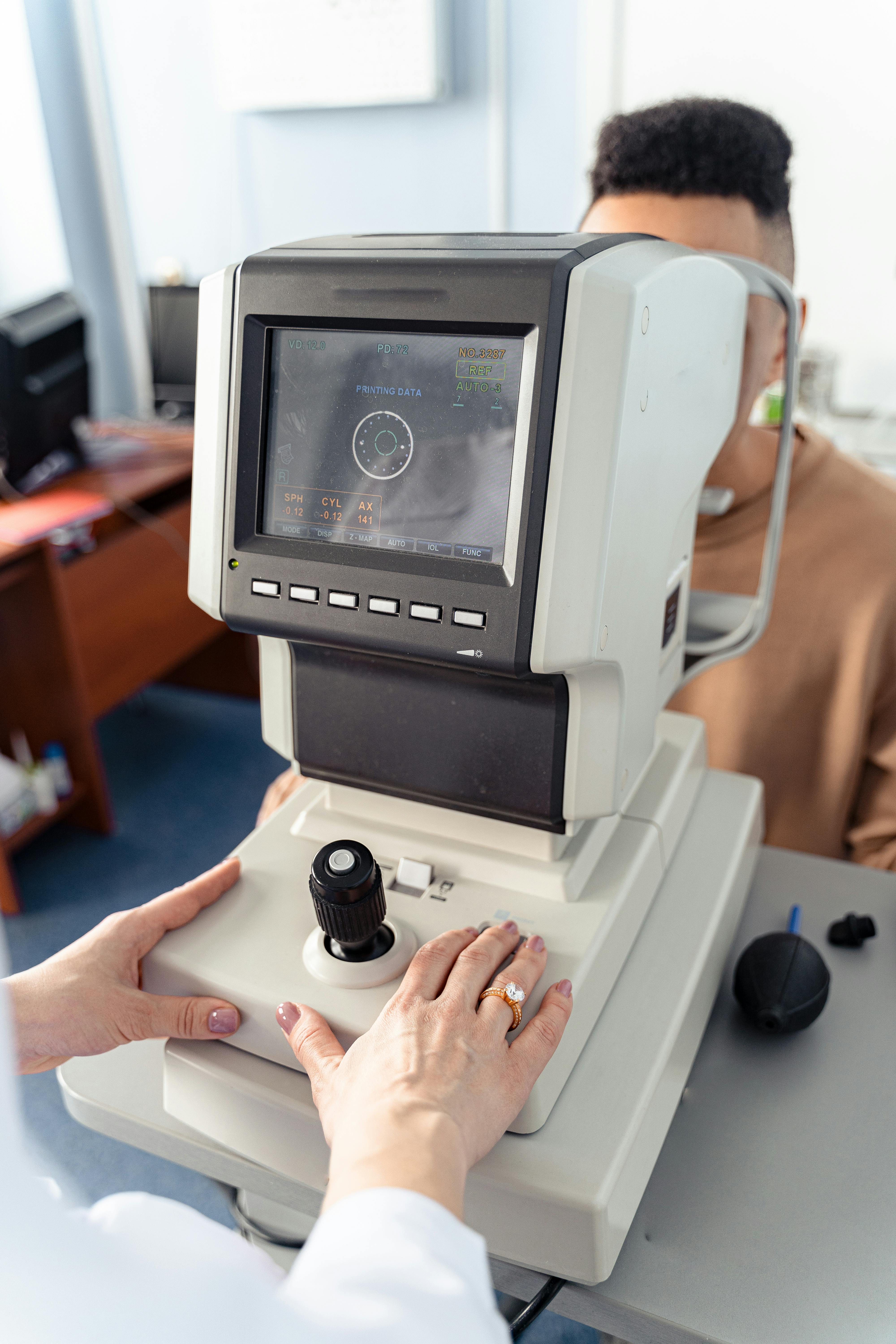
During the eye refraction test, your vision is assessed through a series of precise measurements that evaluate how light bends as it passes through your eye’s cornea and lens.
This vision test procedure typically begins with the use of a computerized refractor to measure your refractive score. You’ll then use a Phoroptor, where you’ll read letters from a chart to identify the smallest row you can see clearly.
This process helps determine the best lens combination for achieving optimal vision. The test is essential for myopia and hyperopia diagnosis and can also assess conditions like astigmatism and presbyopia.
Each eye is tested separately to guarantee accuracy and establish a prescription that meets your visual needs.
Types of Vision Problems Detected by Refraction Tests
Refractive errors represent a range of common vision problems identified during eye refraction tests.
These errors occur when light entering your eye doesn’t focus correctly on the retina, leading to blurry vision. The main types include nearsightedness (myopia), where distant objects appear fuzzy; farsightedness (hyperopia), which makes close objects hard to see; age-related farsightedness (presbyopia), affecting those over 40; and astigmatism, causing distortion at any distance due to an irregular eye shape.
Symptoms of refractive errors can include blurry vision, headaches, and eye strain.
Accurate diagnosis by an eye care specialist is vital, as untreated refractive errors can worsen over time, impacting your overall vision health.
Regular eye exams are essential for early detection and management.
When Should You Get a Refraction Eye Exam?
When should you schedule a refraction eye exam? Healthy adults should have an annual exam to monitor vision changes.
If you’re wearing prescription lenses, it’s important to test yearly to guarantee your prescription remains accurate.
Children should receive their first eye exam by age six months, followed by annual check-ups to catch any refractive errors early.
If you notice any vision problems, such as blurriness at various distances, don’t wait for your next scheduled appointment; seek an exam promptly.
Regular testing not only helps in detecting refractive errors like myopia, hyperopia, and astigmatism but also plays a critical role in maintaining overall eye health.
Prioritizing these exams is essential for optimal visual function.
Understanding Your Eye Prescription Results
Understanding your eye prescription results is essential for maintaining optimal vision and ensuring you choose the right eyewear. Your prescription will include abbreviations like OD for your right eye and OS for your left.
Diopters indicate the lens power needed; negative numbers signal nearsightedness, while positive numbers indicate farsightedness. You might also see CYL for astigmatism correction and an axis measurement in degrees.
If you’re over 40, your prescription may include an “Add” for near vision. Remember, glasses and contact lens prescriptions differ due to their positioning on your eyes.
Keep your prescription updated by scheduling regular eye exams, and always request a copy to facilitate eyewear shopping. Your vision health is paramount—don’t overlook it!

Frequently Asked Questions
Are There Any Risks Associated With an Eye Refraction Test?
There aren’t significant risks associated with an eye refraction test. You might experience temporary discomfort or mild visual disturbances from dilation drops, but these effects usually resolve quickly, leaving no lasting impact on your vision.
How Long Does a Typical Refraction Test Take?
A typical refraction test usually takes about 15 to 30 minutes. During this time, you’ll undergo a series of measurements and adjustments to determine the best prescription for your vision needs. Your comfort’s essential throughout.
Can Children Undergo an Eye Refraction Test?
Yes, children can undergo an eye refraction test. Typically, eye care professionals modify the process for younger patients, ensuring they’re comfortable and cooperative, which helps accurately assess their vision and determine any necessary prescriptions.
Will I Need to Wear Glasses After the Test?
After the test, it’s possible you’ll need glasses, depending on your visual acuity results. The optometrist will assess your prescription and recommend corrective lenses if necessary to improve your vision effectively.
How Often Should I Get a Refraction Test?
You should get a refraction test every one to two years, or more frequently if you notice vision changes. Regular assessments help guarantee your prescription stays accurate and maintain optimal visual health.
Conclusion
To sum up, an eye refraction test is essential for identifying your specific vision needs and ensuring optimal visual clarity. By undergoing this test regularly, you can detect changes in your eyesight and receive the appropriate prescription for corrective lenses. Don’t overlook the importance of maintaining your eye health—schedule your refraction exam as recommended. Understanding your eye prescription results enables you to make informed decisions about your vision care and improves your overall quality of life.


